


I’m a week behind schedule. This post was supposed to go out on Halloween, with it’s slightly devilish theme. I’ve come back to re-edit this post a few times, mostly because the first version was too depressing and the second was overly positive, but also because my last post on dating cost the Palmer Press a subscriber and I need to be more careful.
I’ve also been very tired and maybe a little stressed. Elizabeth was sick, so then Remy got sick. That meant that no one in our little family got any sleep for a while. Then I got a colonoscopy1 after Halloween, which meant I had to fast for a day and a half. That and the lack of sleep reduced my immune system to the point that I was guaranteed to get sick, and here I am at 5am re-editing this essay fueled by DayQuil and Count Chocula. Anyway, please enjoy.
One of the favorite themes of American bluesman is making a deal with the Devil, a trade of one’s immortal soul for some mortal gift. Robert Johnson traded for guitar skills, Charlie Daniels’ (not a bluesman but still) character Johnny competed for a golden fiddle.2 Some rumor that Clapton and Hendrix followed Johnson’s footsteps and made their own deals, and the trope is used in countless other folk tunes, too.
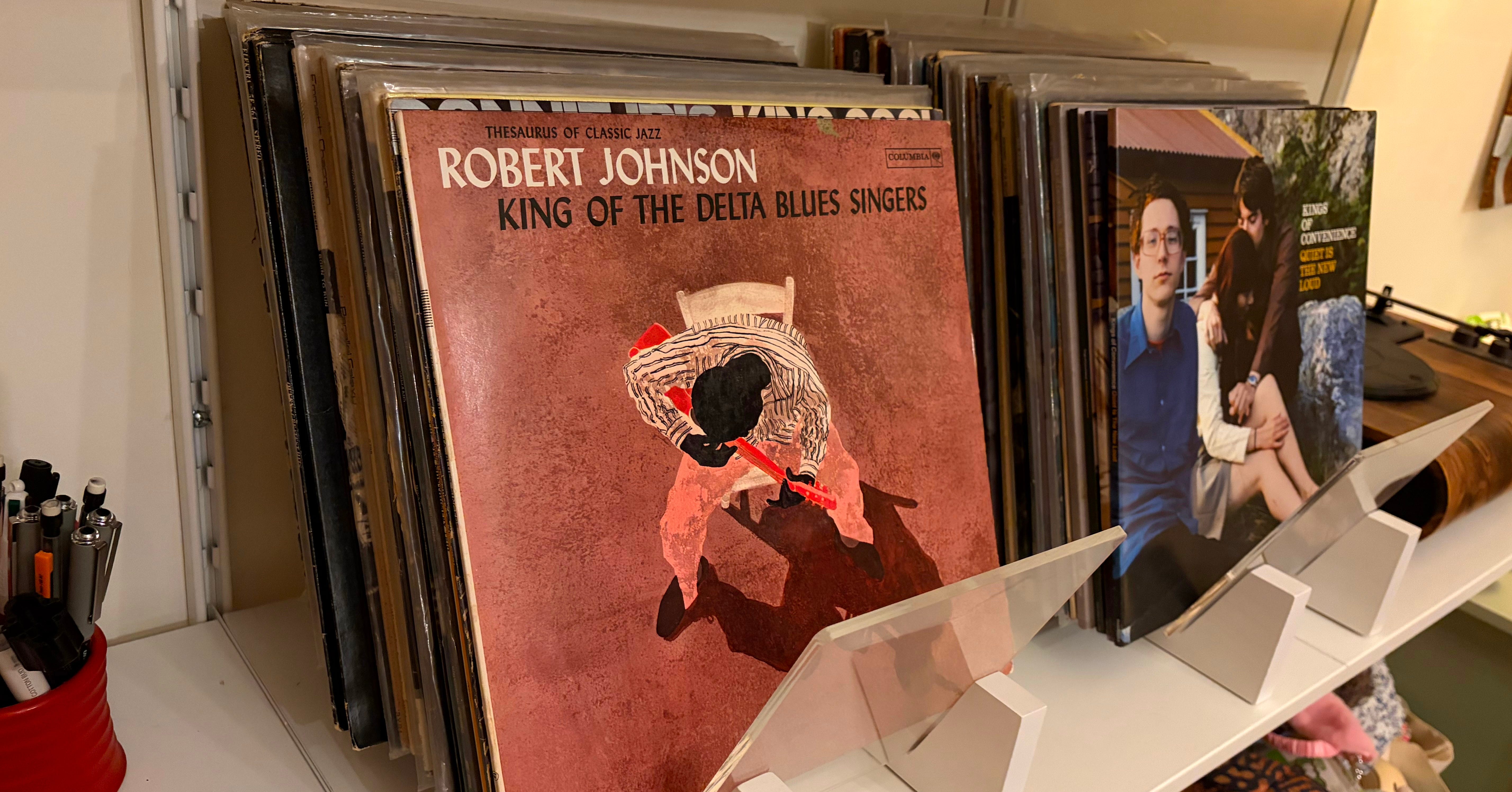
For better or worse, I have never been offered a deal. No one (except for a church cult in Columbus) has ever shown much interest in my soul, and I’m not sure what I’d be willing to trade it for anyway. But, a thought exercise that I’ve been letting run wild lately is if I could have known the results of the labor that I’ve put in to pursuing some goal or skill, or told the hours it would take for me to see the results I have today, would I have still made the choice to pursue that goal? It’s the closest thing to Johnson’s deal with the devil that I can think of, and while I recognize that life is about the journey and not the destination, it can be worthwhile to consider the cost of attempting so many side quests.
There are the obvious examples for me, like playing the guitar. I’ve never had a “good” practice routine, so most of the hours I’ve spent playing guitar were spent aimlessly noodling. Regardless, I’ve definitely put in a lot of time. But for something that carries so much weight in my sense of self, I’m not that good. When I was in high school, after playing three or so years, I think I was technically stronger3 than the average guitarist with three years of experience. Now that I’ve been playing off and on for twenty years, I unfortunately don’t think I sound like a guitarist who’s been wood-shedding for that long. So, if I knew that, should I have given up at some point before now? I play live a few times a year and have a lot of fun doing it, but it takes a lot of my time and money. The question is hard to answer unless I know what I would have done with that time and money.
Following that train of though, I know that instead of spending time journaling or writing posts like this, I would have probably spent that same time ruminating stressful thoughts. Even knowing that in five years I’ll look back on essays like this and cringe at what I’ve put out into the public sphere, I’m okay with it. Knowing where I am now, publishing essays to fewer than a hundred people and being read by fewer than that, I would still choose to keep the practice of writing. I wish I hadn’t taken such a long break from it. Putting words on paper feels like you can drop them from your head, and I feel better when I hit send.
The same is true for my more recent attempts at yoga inversions. It’s usually immediately obvious if someone is going to be able to do something athletic or not. I am unfortunately not a natural at balancing upside down, or really naturally athletic in any capacity. There are always newbies that figure things out in one or two classes, while it took me over a year to feel comfortable doing forearm stands without a wall. I’ve spent two years doing these intensive yoga workshops, and while I’m a lot “better” than I was when I started, I’m not sure that my skills match the number of hours I’ve put in. But, there is joy in the practice regardless of the results. I’m happy to continue. Conversely, I’d probably cut my losses on the squat. I spent a lot of time in college trying to move heavy weights, and all I’ve gotten were some blown discs. I should have probably given up on lifting heavy a long time ago, but my ego won’t let me.
Elizabeth’s least favorite Palmer-ism is “It’s not worth it,” which I often use as an excuse not to reach out to an old friend or to avoid the human interaction required to use a coupon. This thought exercise feels like setting out the scales to see if anything I’ve ever done was ever “worth it.” It can feel depressing to consider something you’ve spent time on as not worth it, but I think our lives and lifestyles change. Sometimes we might do something and it ultimately has no “use” to us. It might not have an extrinsic value now, but hopefully it was at least fun or engaging while we did it. We can’t always drag every element of our sense of self into the next stage of our life. It’s possible that trying to hold on something or trying to keep up some habit is holding us back from committing to our next thing.
It’s taken some reflection4, but I feel positive about how I wouldn’t trade the time I’ve spent on my side-quests so far. I’m just scratching the surface, because the really big important goals (i.e. main quests) that I’ve put time into pursuing would be things like being a good partner to Elizabeth or my new pursuit of trying to make Remy laugh as often as possible. I obviously wouldn’t trade that time and I hope to never stop getting better at either of those things. I can respect the side quests that I haven’t continue as the enjoyable diversions they were. Except for swapping some back pain for less-impressive squat numbers, it feels like I’ve no earthly skill or achievement that I have traded for and/or should trade for. The ends won’t always justify the means and that’s okay.
Thanks for reading.
This is TMI, but in honor of Movember, I’ll repeat what most of the the internet says: if you ever have bloody TP then you should get checked out. My doctor suggested a colonoscopy. Colon cancer rates are higher in Appalachia and I’ve eaten a lot of processed foods in my life, so I was worried for a little while. Luckily, my scan was fine and the root cause of my problem is more likely hack squats than Slim Jim’s. As a result of my clean scan I feel vindicated about my diet and since then I’ve eaten fried chicken, fried mozzarella, fried pickles, and way too many of the snack-size Slim Jim’s that my parents mail me each October along with boxes of Count Chocula and Costco-sized bags of candy for trick-or-treaters.
I was in my high school’s plays and musicals, and a tradition that we had before every performance was playing The Devil Went Down to Georgia twice in memory of Shawn Walton, an ELHS alumni who died in his first year of college. He would ask for the song to be played before his senior musical and apparently had some pretty good choreography for it. I love and miss the sentimental rituals of theater kids.
I hate to use comparative words to describe musicianship. There are certainly objective measures of skill, like being able to play in time or on-pitch or cleanly, but I feel like lot more of musicianship is hard to measure and thus compare. Whenever I hear someone say that they think one guitarist is better than another, I assume they have a very narrow idea of what it means to be musical.
The first draft of this essay, which was probably ~80% re-written, ended like this:
There is a Jimmy Buffet line “I’ve made enough money to buy Miami, but I’ve pissed it away so fast.” Well, I’m 32 years old and have had the hours to do probably anything, and I feel like I’ve pissed them away too.